
Why Earthquake Preparedness Matters Here
The Philippines sits right on the Pacific Ring of Fire, which means earthquakes are not a question of if — they’re a question of when. We have more than 300 active fault lines across the archipelago, and the West Valley Fault alone — cutting through Metro Manila, Rizal, Laguna, and Cavite — has the potential to trigger a magnitude 7.2 earthquake that could affect millions of Filipinos at once.
PHIVOLCS (the Philippine Institute of Volcanology and Seismology) has been consistently reminding us about this risk for years. Yet many of us still haven’t taken concrete steps to prepare. This guide is meant to change that — in a practical, no-drama way that actually makes sense for Filipino households.
Before the Earthquake: Preparing Your Home and Family
Know Your Fault Lines and Your Barangay’s Risk Level
The first thing you should do is check if your home, school, or workplace is near an active fault. PHIVOLCS has an online fault finder tool on their website (phivolcs.dost.gov.ph) where you can check if your property falls within the danger zone of a known fault line.
Your barangay hall should also have a Local Disaster Risk Reduction and Management Plan (LDRRMP). Don’t be shy about asking for it — that’s what it’s there for. Your BDRRMC (Barangay Disaster Risk Reduction and Management Committee) can tell you the specific risks in your area and what the community’s evacuation plan looks like.
Secure Your Home, Room by Room
A lot of earthquake injuries don’t come from the ground shaking — they come from things falling on people. Here’s what to check:
- Living room and bedroom: Anchor heavy furniture like cabinets, bookshelves, and ref units to the wall using L-brackets or furniture straps. You can buy these at most hardware stores for a few hundred pesos.
- Kitchen: Move heavy items to lower shelves. Put non-slip mats under appliances. Know where your gas shutoff valve is — and make sure everyone in the household knows, too.
- Walls and ceilings: Check for cracks, especially around door frames and corners. Hairline cracks can be normal, but wider cracks in load-bearing walls are a red flag worth having checked by a structural engineer.
- Water containers: Make sure your tubig storage won’t tip over during shaking. A 5-gallon container that falls can injure someone — and you’ll need that water after a big earthquake.
Build Your Go-Bag
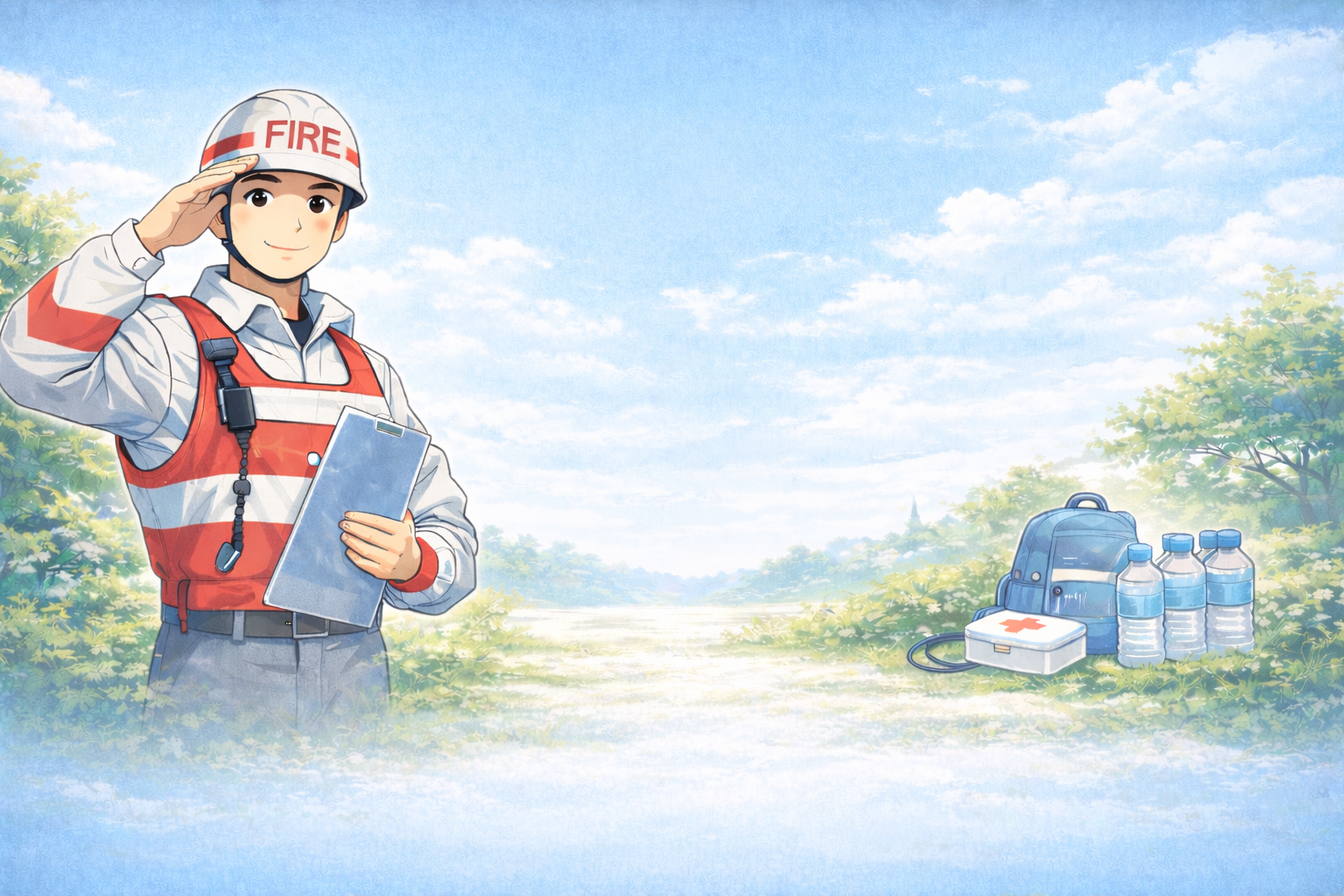
Every Filipino household should have a go-bag — a bag you can grab within seconds if you need to evacuate. The Office of Civil Defense (OCD) recommends keeping it near your main exit. At minimum, it should have:
- Water (at least 1 liter per person per day, for 3 days)
- Ready-to-eat food — instant noodles, crackers, canned goods, energy bars
- A flashlight (and extra batteries, or a hand-crank type)
- First aid kit with basic medicines, especially maintenance meds for family members who need them
- Copies of important documents — IDs, PhilHealth card, insurance papers — in a waterproof pouch
- Cash in small bills (ATMs and e-wallets won’t work if power is out)
- Whistle (a simple whistle can help rescuers find you if you’re trapped)
- Extra clothes and a light blanket
- Phone charger and a power bank
If you have kids, add a few comfort items — a small toy or book can help keep younger children calm during stressful hours in an evacuation center.
Make a Family Communication Plan
Agree on a meeting place outside your home in case family members are in different locations when the earthquake hits. Choose a contact person outside your area — someone in Mindanao or Visayas, for example — who can serve as a central communication point if local lines are congested. Text messages often go through even when calls don’t.
Teach all family members — including the kids — what to do. Practice duck, cover, and hold at home. Make it a game with younger children so they’ll remember it under pressure.
During the Earthquake: Stay Calm and Protect Yourself
Drop, Cover, and Hold On
This is the most important thing to remember. The moment you feel strong shaking:
- Drop to your hands and knees so the earthquake can’t knock you down
- Cover your head and neck with one arm and hand, and get under a sturdy table or desk if one is nearby
- Hold on until the shaking stops — and stay where you are
If there’s no table nearby, get against an interior wall, away from windows and anything that can fall on you. Cover your head and neck with your arms.
Where You Are When It Hits Matters
If you’re inside a building: Stay inside. One of the biggest myths still circulating is that you should run outside during an earthquake — don’t. Falling debris from buildings is most dangerous at the doorway and on the street right outside. Stay put until the shaking stops, then exit calmly.
If you’re in a mall or public building: Stay away from glass, shelving, and anything suspended from the ceiling. Get under a sturdy surface if available. Don’t rush for the exits while things are still shaking — wait for it to stop.
If you’re outdoors: Move away from buildings, electrical posts, and trees. Crouch down in an open area and protect your head.
If you’re driving: Slow down and pull over safely away from bridges, overpasses, and buildings. Stay inside the vehicle until the shaking stops.
If you’re near the coast: After strong shaking, don’t wait for an official tsunami warning — move to higher ground immediately. The rule of thumb: if the earthquake was strong enough that you had difficulty standing, and you’re near the shore, go uphill now. PHIVOLCS issues tsunami bulletins, but shaking itself is your first warning.
After the Shaking Stops — But There’s Still Shaking
Aftershocks will come. Sometimes the first event is actually a foreshock, and the bigger earthquake comes after. Expect continued shaking for hours or days following a major quake. Each time you feel it, drop, cover, and hold again.
After the Earthquake: The First Hours and Days
Check Yourself and Your Family First
Before anything else, check for injuries. Don’t move anyone with a potential spine or neck injury unless they’re in immediate danger. Apply basic first aid where needed.
Check for gas leaks — if you smell gas, open windows, leave the building, and don’t use any switches or lighters. Turn off your main gas valve. Report to your barangay.
Assess Your Building Carefully
Before re-entering your home, look at it from the outside first. Check for:
- Visible cracks in walls, especially near corners and door frames
- Tilting or leaning structure
- Damage to the roof or visible gaps in the foundation
- Utility lines that may have been damaged
If anything looks structurally compromised, don’t go back in. Wait for your local DRRMO (Disaster Risk Reduction and Management Office) or a structural engineer to assess it. A damaged building during aftershocks is extremely dangerous.
Connect With Your Barangay and Community
Your barangay is your first line of response. Report injuries, trapped individuals, and structural damage to your BDRRMC right away. They coordinate with the municipal or city DRRMO and can escalate to the OCD if the situation requires broader response.
In past disasters, one of the biggest challenges in the immediate aftermath wasn’t the lack of resources — it was the difficulty of getting accurate information about who needed help and where. Reporting to your barangay, even a simple headcount of your household, helps responders prioritize.
Check on elderly neighbors, persons with disabilities, and households with young children — they often need more support in the hours after a disaster and may not be able to ask for help themselves.
Water and Food Safety
After a major earthquake, assume your tap water is unsafe until local authorities confirm otherwise. Pipes can crack underground without being visible, allowing contamination to enter the supply. Use your stored water, and boil before drinking if you’re unsure.
Check your food stocks. Canned goods are generally safe if the cans aren’t swollen or damaged. Throw out perishables that have been unrefrigerated for more than two hours in tropical heat.
Mental Health Is Part of Recovery Too
It’s normal to feel anxious, have trouble sleeping, or be easily startled after a major earthquake — even if you and your family are physically okay. Talk about what happened. Maintain routines as much as possible. Check in on children and the elderly, who may need extra reassurance.
If anxiety or distress is severe or persistent, the Department of Health and local health centers offer psychosocial support after disasters. You don’t have to manage it alone.
Staying Informed: Reliable Sources
During and after an earthquake, rely on official sources for information. Social media can spread inaccurate updates quickly, especially in the first hours when the situation is still developing.
- PHIVOLCS — for earthquake monitoring, fault line information, and tsunami bulletins
- OCD (Office of Civil Defense) — for disaster response coordination and official advisories
- Your local DRRMO — for community-level response and evacuation guidance
- NDRRMC (National Disaster Risk Reduction and Management Council) — for national-level situation reports
Save these contacts on your phone now, before you need them.
One Step at a Time
Earthquake preparedness doesn’t have to be expensive or complicated. Start with what you can do this week: check if your area is near a fault line, talk to your family about what to do during shaking, and put together at least a basic go-bag. Then build from there.
We live in one of the most seismically active countries in the world — but we also have a strong culture of bayanihan that has helped Filipino communities recover from disasters throughout history. The goal isn’t to eliminate risk entirely; it’s to make sure that when the ground shakes, you and the people you care about are ready.
Sources
- PHIVOLCS — Philippine Institute of Volcanology and Seismology: https://www.phivolcs.dost.gov.ph
- Office of Civil Defense (OCD): https://www.ocd.gov.ph
- NDRRMC — National Disaster Risk Reduction and Management Council: https://www.ndrrmc.gov.ph
- PHIVOLCS Fault Finder Tool: https://faultfinder.phivolcs.dost.gov.ph
- West Valley Fault System Study, PHIVOLCS-DOST


コメント