
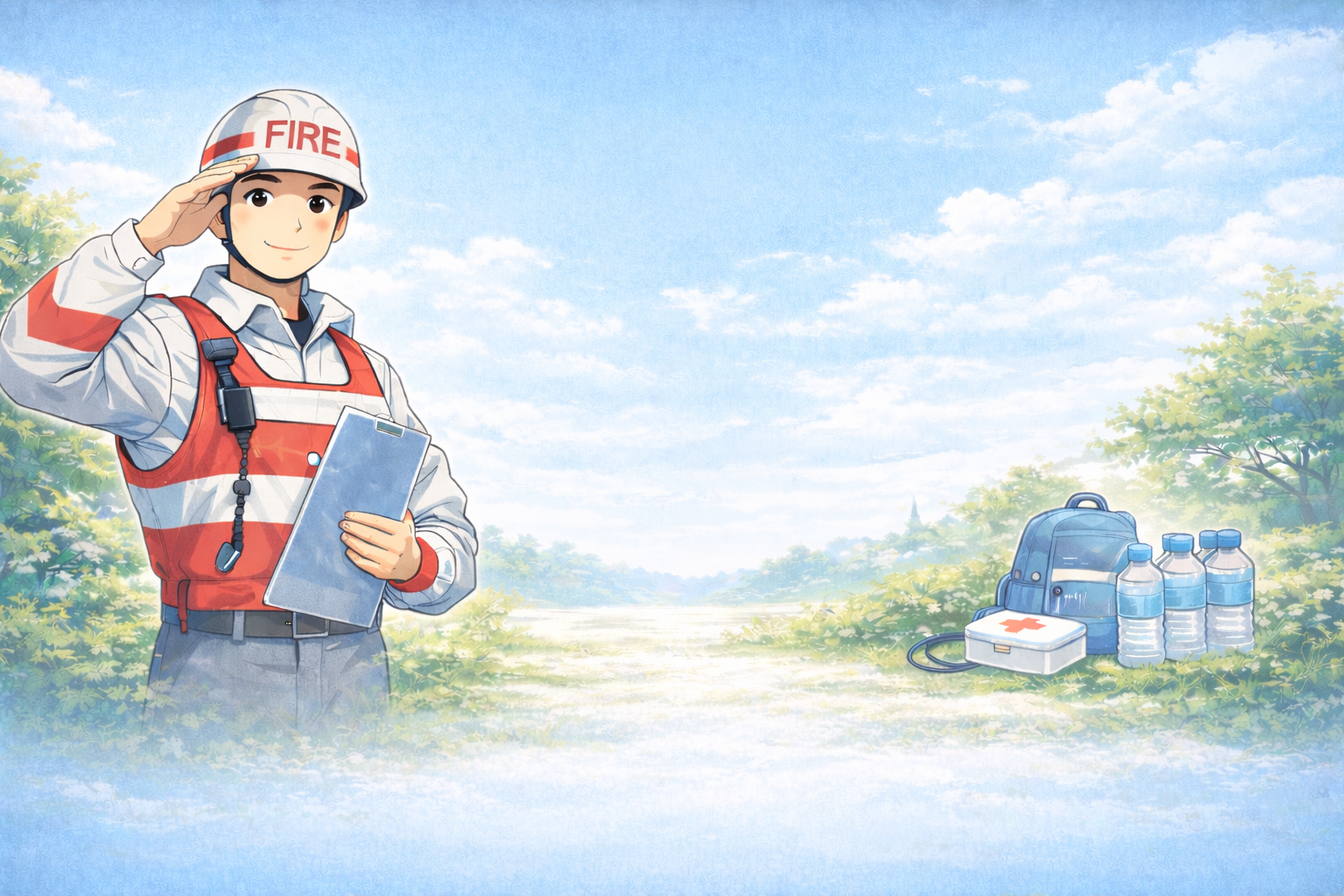
The go bag sitting in the corner of your sala looks prepared. It has canned goods, bottled water, a flashlight. What it almost certainly does not have — based on patterns seen repeatedly at evacuation centers during typhoon response — is the thing that causes the most regret two days in: the maintenance medication. The glasses. The small bills in denominations you can actually use. The way to charge a phone when the power has been out for 36 hours. Nobody forgets the dramatic items. They forget the routine ones. And the routine ones are what break you.
- Weight Kills the Kit Before the Typhoon Does
- The 72-Hour Window: What the First Three Days Actually Demand
- What People Consistently Forget — And What It Costs Them
- Packing for Children, Elderly Family Members, and People with Special Needs
- The Bag That Soaks Through: Typhoon-Specific Packing Mistakes
- When to Grab the Bag and Leave: A Decision Rule, Not a Waiting Game
- The One Thing You Can Do in the Next Ten Minutes
- Frequently Asked Questions
Weight Kills the Kit Before the Typhoon Does
Here is the most consistent failure pattern in go bag preparation: the bag is too heavy to carry while also holding a child by the hand or supporting an elderly parent down a flooded street. A 15-kilogram bag that stays behind because you physically could not manage it is not a go bag — it is a storage box you paid money to pack. The weight problem is more common than the missing-item problem, and it almost never appears on any checklist.
The rule of thumb that actually works: your go bag should not exceed 10% of the bodyweight of the person carrying it — and for most adults moving through flood conditions with family members to manage, aim lower. If you have a lolo or lola in the house, or a child under five, someone in your family is going to have both hands occupied. Pack for that reality, not for the assumption that everyone walks out freely.
This means making hard choices. A gallon jug of water is nearly four kilograms. Three changes of clothes for a family of five is already a full bag. Before you add anything, ask: Can the lightest adult in this house carry this bag alone while also managing one other person? If the answer is no, take things out.
To help with load management, a compact rolling bag or a well-fitted backpack with a waist strap distributes weight far more effectively than a drawstring sack or a paperbag. It is a small investment that determines whether the bag actually makes it to the evacuation center.
The 72-Hour Window: What the First Three Days Actually Demand
The Philippine Red Cross and the National Disaster Risk Reduction and Management Council (NDRRMC) both orient emergency kit guidance around 72 hours — the period during which outside relief may not yet reach your evacuation site. This is not a worst-case scenario. After Typhoon Haiyan (Yolanda) in 2013, many communities in Eastern Visayas waited longer than 72 hours before organized relief distribution reached them. The barangays that fared best in those early days were the ones with families who had carried enough for three days without depending on anyone else.
Plan your go bag contents against this timeline explicitly:
- Water: At minimum, one liter per person per day. For a family of four, that is 12 liters for 72 hours — which is heavy. Prioritize water purification tablets or a personal filter straw to reduce what you carry; these are small, light, and let you treat water you find on site. The Philippine Red Cross recommends having both treated water and a purification method.
- Food: Ready-to-eat, non-perishable items that require no cooking. Crackers, instant oats in sealed pouches, canned goods with pull-tab lids (not ones that need a separate opener), energy bars. Do not pack food that requires fire or electricity to prepare — evacuation centers often have neither.
- Light source: A headlamp, not just a flashlight. Two free hands matter when you are navigating a dark gym packed with hundreds of people. Bring extra batteries and keep them in a sealed zip-lock bag.
- Basic first aid: Antiseptic, bandages, oral rehydration salts (especially for children and elderly), and any prescription medication for at least five days. Five days because access to pharmacies after a major typhoon can be disrupted longer than you expect.
For guidance on what to monitor before deciding to pack that bag and leave, Stay or Go? Making the Right Call During a Typhoon walks through the decision framework in detail.
What People Consistently Forget — And What It Costs Them
The items that cause the most distress at evacuation centers are never the dramatic ones. They are the prescription medications that were left on the bathroom counter. The reading glasses sitting beside the TV. The ATM card without any cash to back it up — because ATM machines lose power too, and the nearest one that works may be two towns away. The phone charger that got left behind because “the phone still had 40% battery when we ran.”
These are the items that separate a tolerable 72 hours from a genuinely difficult one. Pack them deliberately:
- Prescription medications: At least a five-day supply, in original labeled packaging. If a family member has a chronic condition — hypertension, diabetes, asthma — this is not optional. Talk to your doctor now, before typhoon season peaks, about keeping a small emergency supply.
- Eyeglasses and hearing aids: If any family member depends on these, they go in the bag in a hard case. A person who cannot see or hear clearly in a crowded evacuation center is a person who is genuinely unsafe.
- Cash in small bills: Five hundred pesos in twenties and fifties is more useful than a single five-hundred-peso bill. Vendors near evacuation sites often cannot make change. ATMs are frequently down.
- Phone charging solution: A fully charged power bank — charged before the storm arrives. A compact solar charger as a backup. Your phone is your connection to emergency communications and your family coordination tool. Treat it that way.
- Copies of important documents: In a sealed waterproof bag: IDs, birth certificates, insurance documents, land titles if applicable. Originals are better, but laminated photocopies are far better than nothing.
A compact, waterproof document sleeve keeps papers dry even when a bag gets submerged in shallow floodwater — which happens more often than people expect during urban flooding.
Packing for Children, Elderly Family Members, and People with Special Needs
A go bag packed for a healthy adult in their thirties does not serve a six-year-old, a lola with arthritis, or a family member with a disability. These are not edge cases in Filipino households — extended families are the norm, and the people who require additional consideration are often the people who cannot advocate for themselves in a chaotic evacuation.
For young children: Include a change of clothes sized for them (not the family’s general stash), any comfort item small enough to fit (a specific stuffed animal or familiar object genuinely reduces distress in displacement, based on what is consistently observed at evacuation centers), oral rehydration salts, and their own small backpack with their name written on it. Children who carry their own light bag feel less helpless and are easier to account for.
For elderly family members: Prioritize medications above all else. Add non-slip slippers or shoes that are easy to put on quickly. Include a small written card listing their name, age, medical conditions, and emergency contact — in case they become separated or disoriented. If they use a cane or walker, that item goes with them, not in the trunk of a vehicle.
For family members with disabilities: Pre-plan the evacuation route with their specific mobility in mind. Identify which neighbor or barangay official knows to assist. The bag itself may need to be carried by someone else — which means that person needs to know where it is and what is in it. A communication-dependent family member may need an alternate signaling method if they cannot speak or hear over crowd noise.
Making sure every family member knows their role in an emergency — including who carries what and who assists whom — is the work that Gaano Ka Handa ang Pamilya Mo Kapag Sumapit ang Kalamidad? covers in practical detail.
The Bag That Soaks Through: Typhoon-Specific Packing Mistakes
Most go bag advice is written for generic emergencies. In the Philippines, the specific context is typhoon season — which means rain, flooding, and the realistic possibility that your bag gets wet during evacuation. A regular backpack, even a good one, is not waterproof. After twenty minutes of typhoon rainfall or wading through knee-deep floodwater, anything not in a sealed container is compromised.
The fix is not to buy an expensive waterproof bag (though those exist). The fix is to use what is already in your kitchen: large, heavy-duty zip-lock bags or sealed plastic containers inside the bag. Separate your contents into categories — documents, medications, electronics, food — and seal each category individually. If the outer bag fails, the contents survive. This costs almost nothing and takes ten minutes to set up.
A second typhoon-specific mistake: packing items in the order you think you will need them, rather than in the order you will actually reach them. Medications and phone chargers should be at the top, accessible without unpacking everything. The items you will need on day one should not be buried under day-three supplies.
PAGASA (pagasa.dost.gov.ph) provides rainfall and storm surge forecasts that can give you a 24–48 hour window before conditions deteriorate. Checking PAGASA’s advisories during the June–November typhoon season is part of the preparation cycle, not a one-time action.
When to Grab the Bag and Leave: A Decision Rule, Not a Waiting Game
The most dangerous version of go bag preparation is the one where everything is ready but the family waits too long to use it. Having a bag does not help if you leave after floodwater has already reached the second step of your stairs. The bag and the decision to leave are two different preparations, and both require work ahead of time.
A usable decision rule for most Filipino families in typhoon-prone areas: If your barangay is under Typhoon Signal No. 3 or higher, or if your area is in a low-lying zone with a history of flooding, the go bag goes to the door when the signal is raised — not when the water comes in. Waiting for visible flood water to appear before you act means you are already behind.
Pre-identify your evacuation route and your destination before the season starts. Know whether your designated evacuation center is a school, a gymnasium, or a barangay hall — and know whether it has capacity issues. As covered in What Really Happens Inside a Typhoon Evacuation Center, conditions at these sites vary enormously, and arriving early makes a significant difference in what space and resources are available to your family.
Tell someone outside your immediate area — a relative in another province, a friend — your plan. Where you are going, what route you are taking, when you expect to arrive. This is the part of family emergency communication that most people skip, and it is the part that helps locate people when cell service is restored. See Gaano Ka-Handa ang Pamilya Mo Kapag Tumama ang Sakuna? for how to build this out properly.
The One Thing You Can Do in the Next Ten Minutes
Go bag preparation does not have to happen in one afternoon. The version that actually gets done is the one that starts with a single action today.
Right now — before this tab closes — find the bag you would use. Any bag. A backpack, a bayong, a travel bag. Put it somewhere visible: beside the front door, in the sala. Not in a cabinet, not in the bodega. Visible. That single act of placing the bag where you will see it every day is what prompts the next step: adding one item the next time you pass it, and one more the day after.
Then, this week: check your prescription medications. Do you have at least five days’ supply? If not, that is the first real item to address — not the flashlight, not the canned goods. The medications. They are the item most likely to be forgotten in an actual emergency, and the hardest to replace once you are already at an evacuation site.
If your household has never talked through what to do when a typhoon signal is raised, that conversation is also a form of preparation. Who carries the bag. Who gets lolo. Who takes the dog. Who calls the relative in Cebu. These decisions made under calm conditions become instinct under stress. The families that move well in an evacuation are almost always the ones who talked about it before they needed to.
For a full household preparedness guide covering supplies, communication, and what to do when a typhoon is already approaching, see Bagyong Paparating: Paano Maghanda Bago Mahuli ang Lakas. And to make sure your supplies stay current rather than expiring in the back of a cabinet, Never Let Your Typhoon Supplies Expire Again has practical rotation guidance specific to Philippine conditions.
The go bag does not have to be perfect. It has to be light enough to carry, stocked with what you actually need on day two rather than just day one, and somewhere you can grab it in under a minute. That version — imperfect but real — is the one that goes out the door when it matters.
For official guidance on emergency kit contents and evacuation protocols, refer to the National Disaster Risk Reduction and Management Council (NDRRMC).
Frequently Asked Questions
Ano ang dapat nasa go bag ng isang pamilya sa Pilipinas?
Ang isang go bag para sa Filipino families ay dapat may tubig, de-latang pagkain, flashlight, at first aid kit — pero ang madalas na nakakalimutan ay ang maintenance medications, glasses, at maliit na pera sa tamang denomination. Dapat din may portable charger o power bank dahil karaniwang wala ng kuryente nang 36 oras o mas matagal pagkatapos ng bagyo. Siguraduhing ang bag ay hindi hihigit sa 15 kilos para kaya mong bitbitin kahit may hawak kang bata o tumutulong sa isang matanda.
Gaano kabigat ang dapat na go bag?
Ang go bag ay hindi dapat hihigit sa 15 kilos dahil kailangan mong makakilos nang mabilis sa mga flooded na kalsada, lalo na kung may kasama kang bata o may edad na magulang. Ang sobrang bigat na bag ay isa sa pinaka-common na pagkakamali sa disaster preparedness — pinipigilan ka nitong tumakas nang maayos sa oras ng emergency. I-prioritize ang mga pinakamahalaga at magaang na gamit, at alisin ang mga hindi talaga kailangan.
Dapat bang may pera sa go bag? Magkano?
Oo, dapat may cash sa iyong go bag, at mas mainam na nasa maliliit na denominasyon ito tulad ng piso, singkwenta sentimos, at dalawang piso dahil maaaring walang sukli ang mga tindahan o relief goods distribution. Sa panahon ng kalamidad, ang mga ATM ay karaniwang hindi gumagana o walang laman, kaya ang cash on hand ay napakahalaga. Inirerekomenda ng mga disaster response experts na mag-ipon ng sapat para sa tatlo hanggang pitong araw na pangunahing pangangailangan.
Paano mo cha-chargehan ang telepono sa panahon ng bagyo kapag walang kuryente?
Ang pinakamagandang solusyon ay ang magkaroong power bank na may mataas na kapasidad — kahit 20,000 mAh — na laging naka-charge at nasa go bag mo. Maaari ka ring gumamit ng solar-powered charger, na partikular na kapaki-pakinabang sa Pilipinas dahil mabilis bumalik ang araw pagkatapos ng bagyo. Ito ang isa sa mga bagay na madalas nakakalimutan sa go bag pero kritikal para makatanggap ng emergency alerts at makapag-ugnayan sa pamilya.
Kailangan ba ng maintenance medications sa go bag kahit hindi naman lagi may sakit?
Oo, lalo na kung ikaw o ang sinumang miyembro ng iyong pamilya ay may regular na iniinom na gamot para sa diabetes, hypertension, o asthma — dahil sa evacuation centers, halos imposibleng makakuha ng reseta o mapuntahan ang botika. Ayon sa mga obserbas
Survival Gear and Equipment Kit (258 Pieces)
A ready-made 72-hour kit is useful when a family has not yet built its own go-bag. Use it as a starting point, then add local documents, medication, cash, chargers, and water for your household size.
Before buying, compare local availability, shipping, household size, and official guidance.
As an Amazon Associate I earn from qualifying purchases.
🛡 What a former firefighter actually relied on in the field
A pre-assembled kit is the realistic first step. Buying items one by one leaves you unprepared.
📦 72-Hour Emergency Survival Kit / Go-Bag ›
As an Amazon Associate we earn from qualifying purchases. (Amazon US — international shipping available)
Comments